
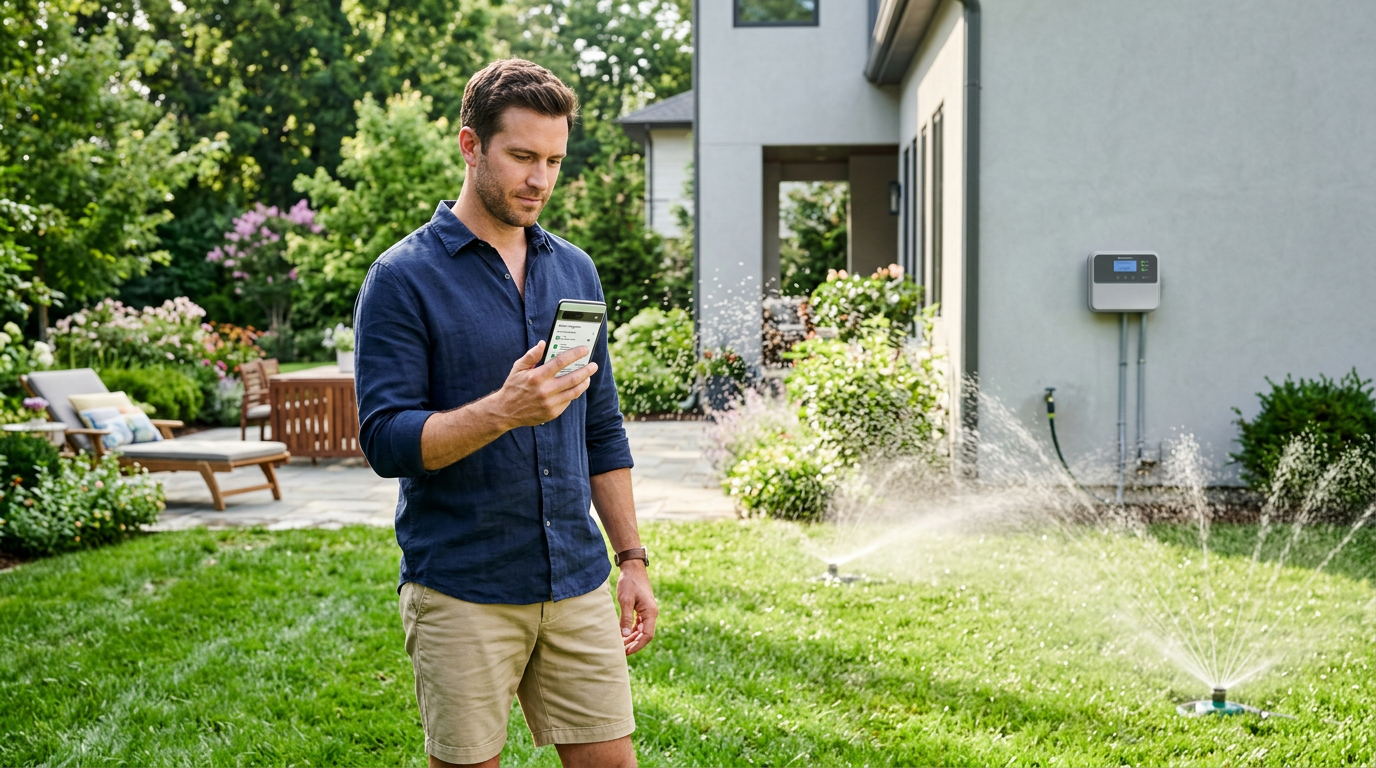
Choosing the right smart irrigation controller can slash your water bill by 30–50% while keeping your landscape healthy year-round. With Wi-Fi connectivity, weather-based scheduling, and zone-by-zone control, today’s controllers are smarter than ever. In this guide, we break down the top smart irrigation controllers available at Smart Sprinkler Genius so you can find the perfect fit for your property.
Why Upgrade to a Smart Irrigation Controller?
Traditional irrigation timers run on fixed schedules regardless of rainfall, soil moisture, or temperature. Smart controllers change the game by automatically adjusting watering based on real-time weather data and local conditions. The result? Healthier turf, less water waste, and lower utility bills.
Key benefits of upgrading include:
- Water savings: EPA WaterSense-certified controllers can reduce outdoor water use by up to 50%.
- Remote control: Manage zones from your phone whether you’re at home or traveling.
- Weather intelligence: Automatic rain delays and seasonal adjustments eliminate guesswork.
- Zone flexibility: Program each zone independently for drip, rotors, or spray heads.
Top Smart Irrigation Controller Brands We Carry
Hunter Hydrawise Controllers
Hunter’s Hydrawise platform is one of the most popular Wi-Fi irrigation systems in the professional market. The Hunter Pro-C PC-400 is a workhorse for residential and light commercial jobs, supporting up to 23 stations with expansion modules. Pair it with the Hydrawise HPC-FP Wi-Fi Facepack to add full cloud-based scheduling, predictive watering, and flow monitoring.
For larger properties, the Hunter ACC2 series scales up to 54 stations and integrates seamlessly with Hydrawise. The Hunter WAND Bluetooth & Wi-Fi Module is perfect for upgrading existing X2 controllers to smart capability without replacing the entire unit.
Rain Bird Wi-Fi Controllers
Rain Bird’s ESP-ME3 and RC2 lines deliver reliable smart irrigation at competitive prices. The Rain Bird ESP4ME3 is a modular controller that starts at 4 zones and expands up to 22. It supports Rain Bird’s LNK Wi-Fi module for app-based control and weather-based scheduling.
The Rain Bird RC2 Outdoor 8 Zone Wi-Fi Controller is a great all-in-one solution for smaller residential systems, featuring built-in Wi-Fi, a color display, and Rain Bird’s intuitive app.
Weathermatic SmartLine Controllers
Weathermatic’s SmartLine series is known for its ET-based water management and SLW weather station integration. These controllers use real-time evapotranspiration data to determine exactly how much water your landscape needs each day. The SmartLine platform supports expansion modules like the Weathermatic SLM2 2-Station Module and the SLM12-4800 12-Station Module for scaling larger properties.
DIG LEIT Controllers
DIG’s LEIT series controllers are designed for large-scale commercial and agricultural applications. They feature 2-wire decoder systems, making them ideal for sprawling landscapes where running individual station wires is impractical. The DIG BOHE-BT Bluetooth Hose End Timer offers an affordable Bluetooth option for garden beds and container watering.
B-Hyve Smart Timers
For homeowners looking for an affordable entry point, the B-Hyve Smart Hose Watering Timer brings Wi-Fi control to any standard hose bib. It’s WaterSense-certified and works with the free B-Hyve app for scheduling and weather adjustments.
How to Choose the Right Controller: Key Factors
Number of Zones
Count your irrigation zones before shopping. Small residential systems typically run 4–8 zones, mid-size properties need 12–16, and commercial sites may require 24 or more. Modular controllers like the Hunter Pro-C and Rain Bird ESP-ME3 let you start small and add expansion modules later.
Connectivity
Most modern controllers offer Wi-Fi, but Bluetooth-only models (like the DIG BOHE-BT) work well for simple setups where you don’t need remote access from outside your property. If you manage multiple properties, look for cloud-based platforms like Hunter Hydrawise or Rain Bird’s app ecosystem.
Weather Intelligence
Look for controllers that integrate weather station data or use internet-based weather services. Weathermatic’s ET-based system is among the most precise, while Hydrawise’s predictive watering uses hyperlocal forecasts to skip unnecessary cycles.
Indoor vs. Outdoor Rated
Make sure your controller matches its installation location. Outdoor-rated units like the Rain Bird RC2 include weatherproof enclosures, while indoor models need a garage or utility room mounting location.
Expandability
If your landscape may grow, choose a modular system. Hunter’s ICC2 expansion modules and Toro’s Evolution modules (like the EMOD-4 and EMOD-12) let you scale without replacing your base controller.
Comparison Table: Top Controllers at a Glance
| Controller | Zones | Connectivity | Best For |
|---|---|---|---|
| Hunter Pro-C + Hydrawise | 4–23 | Wi-Fi (Hydrawise) | Residential & light commercial |
| Rain Bird ESP4ME3 | 4–22 | Wi-Fi (LNK module) | Budget-friendly modular |
| Rain Bird RC2 | 8 | Built-in Wi-Fi | Small residential all-in-one |
| Weathermatic SmartLine | 4–48 | Wi-Fi + ET weather | Water-conscious large properties |
| B-Hyve Hose Timer | 1 | Wi-Fi | Hose-bib & container watering |
| DIG LEIT Series | Up to 200+ | 2-wire decoder | Commercial & agricultural |
Installation Tips
Installing a smart controller is straightforward if you’re replacing an existing timer. Label each zone wire before disconnecting the old unit, and photograph the wiring panel for reference. Most smart controllers use the same common wire and zone wire setup, so it’s a direct swap. After mounting, connect to your home Wi-Fi during the initial app setup process to enable weather-based scheduling.
If you’re starting from scratch, plan your zone layout based on plant type (turf vs. drip vs. shrubs), sun exposure, and soil type. Each zone should group areas with similar water needs.
Frequently Asked Questions
Do smart irrigation controllers actually save water?
Yes. EPA WaterSense-labeled controllers save an average of 7,600 gallons of water per household per year. Smart controllers adjust schedules based on weather, soil moisture, and plant needs, eliminating wasteful over-watering that fixed timers can’t avoid.
Can I install a smart controller myself, or do I need a professional?
If you’re replacing an existing controller, most homeowners can handle the swap in 30–60 minutes. The wiring is low-voltage (24V AC) and the apps walk you through setup. For new installations or complex commercial systems, hiring a licensed irrigation contractor is recommended.
What happens to my smart controller if the Wi-Fi goes down?
Smart controllers store their schedules locally. If your internet connection drops, the controller continues running its last saved program. You simply lose remote access and weather updates until connectivity is restored.
How many zones do I need for my yard?
A typical residential yard uses 4–8 zones. Count each area with different watering needs as a separate zone: front lawn, backyard turf, flower beds, drip irrigation for shrubs, and any specialty areas. When in doubt, add extra zones — it’s easier to leave a zone unused than to add wiring later.
Shop Smart Irrigation Controllers
Browse our full selection of controllers and timers from Hunter, Rain Bird, Weathermatic, DIG, Toro, and more. Smart Sprinkler Genius offers competitive pricing with fast US-wide shipping on every order. Need help choosing? Contact our team for expert recommendations tailored to your property.

 No products in the cart.